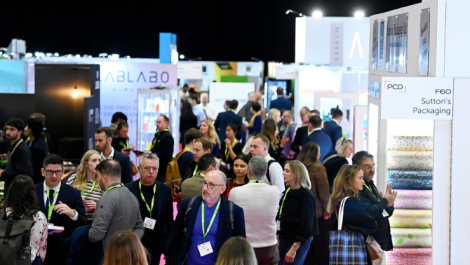

Packaging Innovations & Empack 2027 has unveiled the first sessions for its conference programme, which includes speakers from PepsiCo, Tesco and Siemens.
Taking place at the NEC Birmingham on 24 & 25 February 2027, the event will also feature senior figures from Mars and Greencore, alongside the founder of the Museum of Failure. Under the theme ‘Innovation in Practice’, the conference will tackle the gap between ambition and execution, from circular packaging models that struggle to scale to the risks of AI-generated design and the production inefficiencies that new machinery alone cannot solve.
Vinicius Sales, global design lead at PepsiCo, will take delegates behind the scenes of packaging innovation in his keynote, ‘More than a can: Designing packaging that performs, surprises and endures’.
Dr. Samuel West, founder and curator of the Museum of Failure, will tackle the rise of ‘AI slop’ in ‘AI: When innovation goes wrong’, highlighting the risks of AI-generated designs that are convincingly presented but fundamentally flawed, creatively hollow or spectacularly off-brand.
Meanwhile, Nicki Morley, global managing director of Innovation Solutions at Kantar, will join the panel ‘What makes it onto the shelf? Turning consumer insight into packaging that sells’, challenging the disconnect between what shoppers say they want and what they actually buy.
Other speakers include Jane Skelton, head of packaging & creative at Nichols, Raj Kumar, global packaging lead at HelloFresh, David Drew, packaging specialist at PwC, Mike Wilson, chief automation officer at the Manufacturing Technology Centre, and Youssef Riad, senior engineering program manager at Mars.
Casey McHugh, senior conference & community manager at Packaging Innovations & Empack, said: “The packaging industry has never been short of ideas. The challenge is making those ideas work when they meet the realities of production, regulation, cost and consumer behaviour.
“That’s why this programme brings together people who are prepared to challenge assumptions, share what they’ve learned and tackle the difficult questions. Whether it’s understanding why circular models fail to scale, making AI genuinely useful or getting more from existing production lines, we want visitors to leave with insights they can put into practice.”