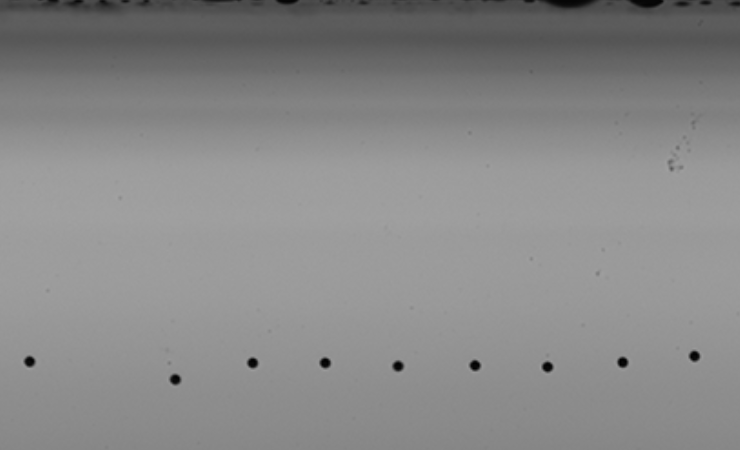
Industrial inkjet printhead supplier Meteor Inkjet has launched its Nozzle Health Technology, which the company claims is the first commercially available system to provide real-time health monitoring of every nozzle in an inkjet printhead.
Describing the technology as a fundamental shift in reliability and quality control for all inkjet applications, Meteor Inkjet says its technology improves the visibility of nozzle performance, giving manufacturers the ability to cut waste, reduce downtime and maintain maximum productivity. The system measures the impulse response of each nozzle in fractions of a millisecond, instantly identifying issues such as wetting, blockage, or air ingestion.
Using Meteor’s NozzleFix software, users can automatically compensate for missing nozzles or pause production for targeted maintenance before problems occur. Without Meteor’s Nozzle Health Technology, nozzle faults are noticed only after producing perceptible errors, the company explains. With this technology the nozzles can be checked without producing any faulty print.
In the packaging sector, the technology supports high-speed production of barcodes, QR codes, and variable data, where even small nozzle defects can render codes unreadable and cause batch rejection or supply-chain disruption. Meteor’s ability to monitor nozzle health at the source acts as a proactive safety net, it says. Manufacturers no longer have to choose between speed and reliability, giving them the confidence to run production lines at maximum capacity while knowing that every mark on every package is being monitored for integrity.
Clive Ayling, Meteor Inkjet’s managing director, commented: “This innovation turns nozzle reliability from a hidden risk into a controlled, measurable parameter. It represents a fundamental step forward in how inkjet systems are operated, maintained, and trusted in production environments. Manufacturers face constant pressure to keep production lines running smoothly while minimising waste. Our technology gives them the clarity they need to operate more efficiently, stay ahead of maintenance issues, and achieve consistently high print quality.”