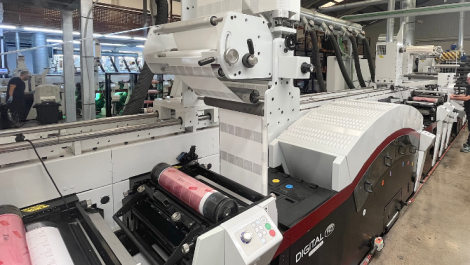
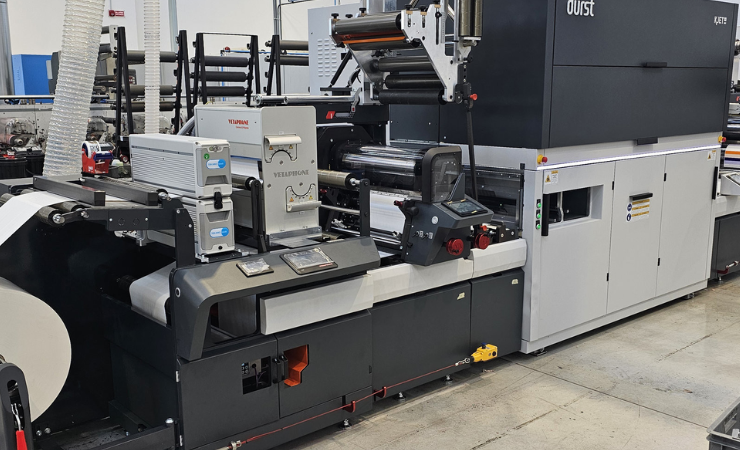
Durst has reported a threefold increase in sales of its hybrid solutions over the last year, citing demand for integrated production systems that combine digital printing, conventional processes and workflow automation.
The company said the growth reflects changing requirements among label converters, who are facing increasing pressure to manage shorter print runs, faster turnaround times, greater SKU complexity and more efficient use of production resources.
Durst’s approach combines digital printing technology with hybrid configurations, workflow software, finishing integration and service support. The company positions its Digital Label Factory concept as an integrated production environment designed to accommodate changing business requirements.
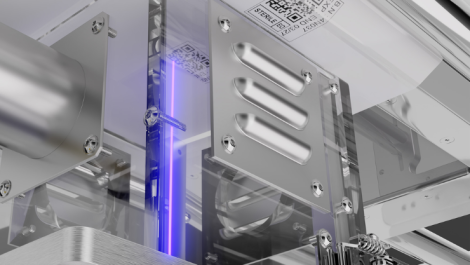
The portfolio includes high-speed, high-resolution digital inkjet printing, inline flexo and finishing capabilities, workflow automation software, colour management and quality control systems. Configurations can be tailored to individual production requirements and scaled as businesses expand. The integrated approach is intended to reduce the complexity associated with coordinating multiple suppliers and disconnected systems.
“Our customers are not just investing in a press—they are investing in a complete production ecosystem,” said Thomas Macina, director of global sales labels and flexible packaging for Durst. “The sales growth reflects the market’s recognition of the integrated capabilities and scalability of our Digital Label Factory approach.”
Durst said it would continue developing its hybrid technology, automation and smart factory integration capabilities as it seeks to support label converters in simplifying production processes and responding to changing operational requirements.