Colour is often the first thing consumers notice on the shelf. If it’s even slightly off, it can lead to confusion, missed sales, or worse, damage to brand trust. For brand customers and their print suppliers, it’s mission-critical.
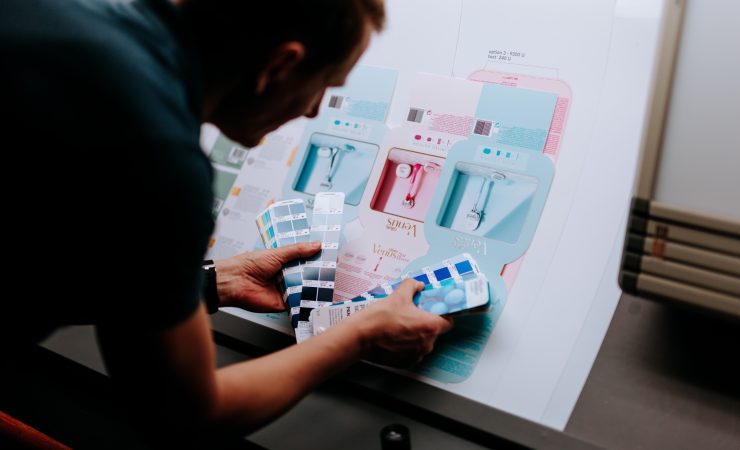
Colour isn’t just a visual element—it’s a promise. For brand owners, designers, and marketers, the expectation is that what they see on screen will be faithfully reproduced on paper, carton, or film. For brand management company, Trident, working on prototypes and short-run projects, delivering on that promise requires precision colour management. When every sample, mock-up, or limited run must match the intended brand palette perfectly, there is no room for guesswork.
Effective colour management enables production teams to anticipate challenges before the first sheet or label is printed. Jason Larard, global colour manager at Trident, explained: “By identifying potential colour shifts in advance, we avoid costly mid-run adjustments and time-consuming corrections. The cornerstone of this process is accurate press and substrate profiling, which captures the unique characteristics of the printing press, the materials in use, and the various ink combinations available.
“While this profiling creates a vast library of data, the payoff is substantial: fewer ink swaps, smoother production, and faster turnaround times. This is particularly vital for our operations, where the press is dedicated not to long production runs, but to one-off prototypes and high-quality mock-ups—applications where precision and speed are equally critical.
“Modern tools such as GMG ColorServer and X-Rite ColorCert have revolutionised how we work. Instead of the old trial-and-error approach—printing multiple swatches, adjusting recipes, and repeating until the desired match was achieved—we can now analyse client artwork digitally, select the most suitable ink set, and determine the closest possible match before any paper is loaded into the press. The result is a faster, more predictable workflow that still maintains the highest colour fidelity possible, within the limits of the press’s gamut.”
Fitting the profile
Profiling shouldn’t be a static, one off task. As Jon-Michael McCartney, director print and packaging, X-Rite, explained: “Initially conducted monthly, our process incorporates each new set of readings into the existing data to produce a rolling average. This smooths out inconsistencies caused by consumable changes and ensures profiles reflect the press’s actual performance over time. Once a full year’s data has been collected, the frequency shifts to every six months— maintaining accuracy while reducing disruption.
“Solutions like the i1Pro 3 help printers profile and calibrate digital presses to ensure consistent output. These profiles feed into digital front ends, allowing printers to simulate colour accurately and make informed decisions before going to press. In digital printing, profiling and proper colour management workflow are key foundations of predictable colour.
“For brand-critical work, tools like PantoneLIVE make a big difference. This cloud-based ecosystem allows brand and print teams to visualise how colours will appear on different materials and printing processes, so they can select the best achievable match. Instead of relying on coated paper drawdowns that don’t reflect final production conditions, printers can make decisions based on real-world substrates.”
According to X-rite, the impact of this approach is clear: faster setup times, fewer production delays, and consistently accurate colour reproduction. Mr McCartney, added: “For clients, it means prototypes and mock-ups that can be approved with confidence, reducing the risk of costly surprises in full-scale production. For us, it transforms the press from a production tool into a powerful platform for innovation—helping brands bring their vision to life with speed and precision.”
Colour matching and colour control shouldn’t require trial-and-error or a team of colour experts. With connected, the right tools digital printers can take control of colour from file to final output on any press, with any substrate. This leads to faster approvals, less waste, fewer reprints, stronger brand relationships, and high-quality, consistent labels and packaging.”