
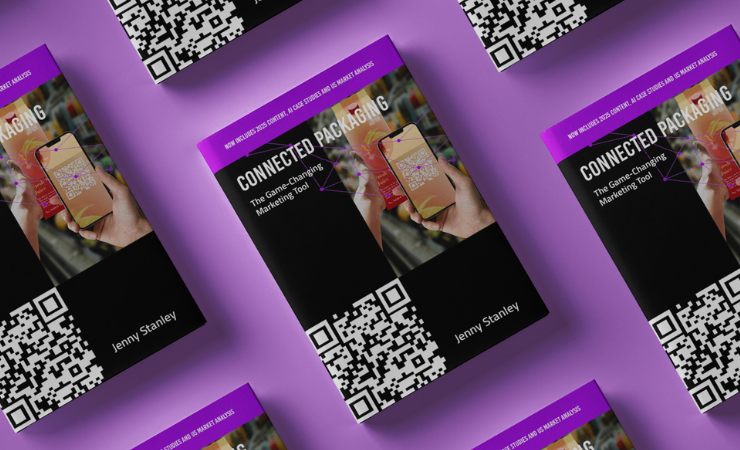
Creative technology studio Appetite Creative has released an expanded edition of “Connected Packaging: The Game-Changing Marketing Tool”, authored by the company’s managing director, Jenny Stanley. The updated 316-page guide examines the evolution of connected packaging as a marketing channel.
The latest edition includes three new chapters and revised data throughout, incorporating the findings of the 2025 Global Connected Packaging Survey. The expanded content builds on the book’s original release in September 2024, reflecting the pace of change across the retail and packaging industries.
According to Ms Stanley, the market has shifted significantly in just a year. “Connected packaging has evolved rapidly from an emerging concept to an essential marketing channel,” she said. “Tesco’s large-scale retail QR code pilot in April 2025, combined with accelerating regulatory and technological shifts, signals that digital product interaction is becoming the new norm. With GS1’s 2027 barcode-to-QR transition on the horizon, brands must adapt quickly to remain competitive.”
Among the new material is a detailed account of the barcode transformation now underway, including Tesco’s 2025 pilot program replacing traditional barcodes with GS1-powered QR codes. Another chapter explores the growing intersection of artificial intelligence, gaming, and connected packaging. The expanded US section analyses the impact of new regulatory frameworks. The updated edition also expands on data privacy coverage.
Findings from the 2025 Global Connected Packaging Survey show that 88.8% of professionals now consider connected packaging an important marketing tool, up from 80.4% in 2024. Only 13.4% view it as a passing trend, while 59% report adopting gamification strategies, representing a 15% increase over the previous year.
In addition to data and case studies, the book presents practical implementation frameworks, regulatory guidance, and technology assessments covering QR codes, NFC, RFID, AR, AI, and blockchain. Case studies show campaigns achieving scan rates above 14%, compared with average engagement rates of 0.1% for traditional digital advertising.